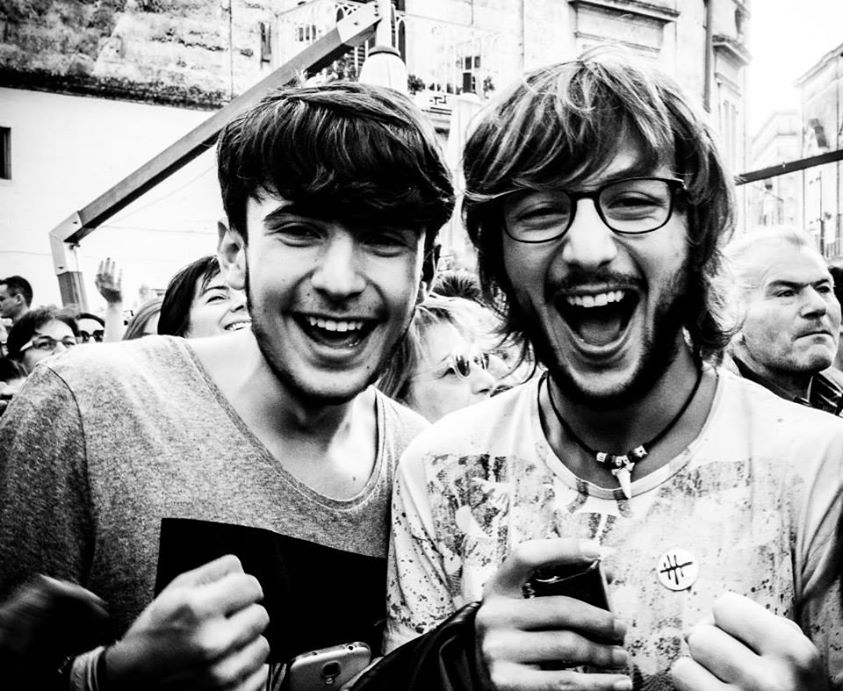
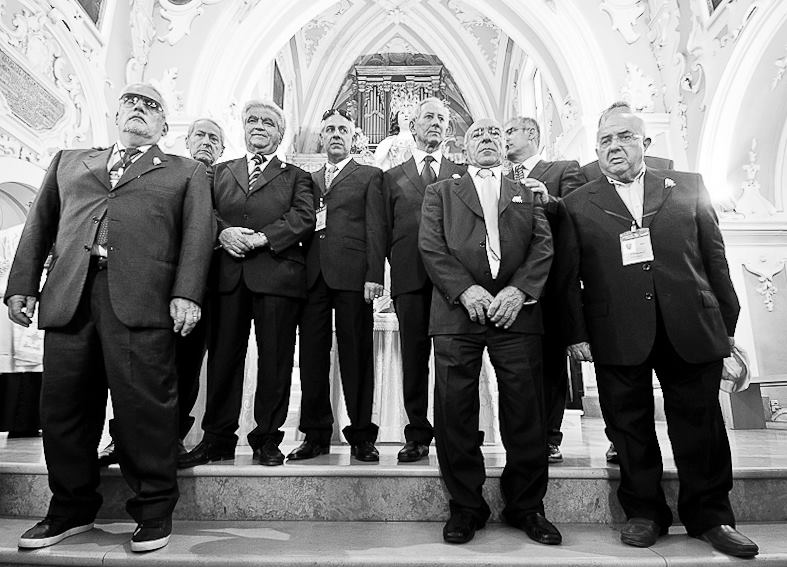
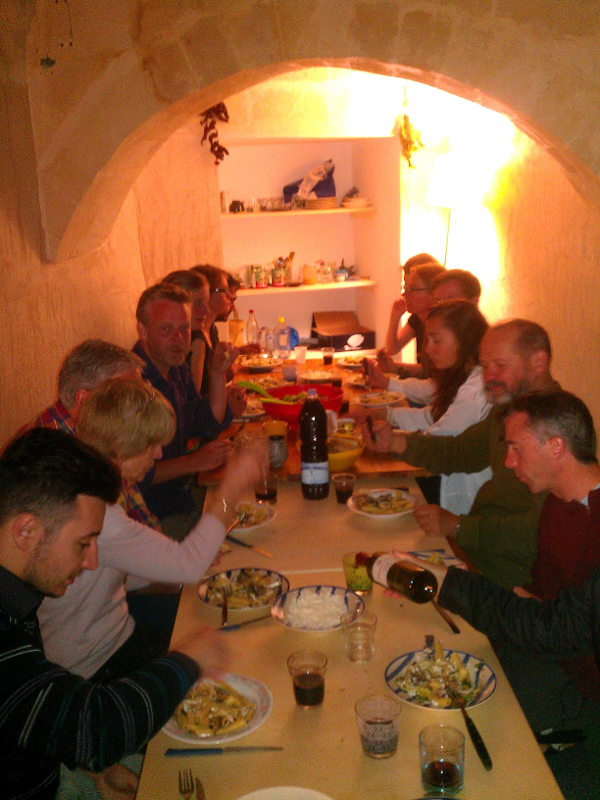
Alessandria — Teatro Comunale

300px-Lejeune_-_Bataille_de_Marengoremit:  When he heard of the unMonastery project, local co-working social activist, Giorgio Baracco, took an impulsive trip to Athens to inquire if we could be interested in a massive project:  his historically pivotal city of Alessandria at the edge of the Piedmont floodplains had a reflex reaction to pesky foreigners…   Concrete actions:  (down at the bottom)

Alessandria has previous: when their fierce defense caused Holy Roman Emperor Frederik Barbarossa to pull out some medieval hair, he changed the name of the city to Keizer – the locals reinstated it at first opportunity; when Napoleon Bonaparte routed the Austria-Hungarian forces, and underlined his disapproval of the papacy by ripping out the local Cathedral, a taller, vaguely finger-shaped spire was erected on the rebuild; when what is diplomatically designated anglo-American forces fire-bombed the beloved classical theatre edifice that had long been the social nucleus of the class that counts, it would damn well be resurrected bigger and better…

The house is cavernous.  Built at a time when the largest theatre in Italy was something to crow over, it is now as viable as a sandal maker for Mastodons.  Location is everything; if it didn’t occupy the centre piece end of the green wooded square facing the railway station, it could be quietly let out cut-price to IKEA.  Closed five years ago after an operational error had spread a nasty batch of asbestos powder through the entire ventilation system, it may soon be nearing a partially functional level.

Teatro 1

Problem however, is what to fill it with: who of the locals have the vision, media pull and international contact network to be able to pack the building with significant reasons to climb out of your favorite sofa?  The framed stars of yesteryear that tradition decrees must smile at you from the stairwells are no longer such pleasant company – the current generation  of their replacements certainly don’t shine as convincingly.

Options
The two – three most grand spaces have an architecture that takes the breath away.  The main foyer stretches long and rises high.  Looking down on it, are at least one elegant mezzanine gallery.  The backstage of the main theatre with a fly space 26m high is as inspiring as any cathedral.  Its massive wooden floor is an unknown commodity in the modern age.

Both these spaces should be considered common property of the populous.  Beautiful operations could be performed there.  If three hundred people a day get to stand stage front and centre, everyone in the city can experience this once a year.  Rationalise this down to thirty people, and each citizen gets several photo ops in a lifetime.  As a monument to the transcendental powers of cooperative effort that theatre personifies, the house cries out for intense human activity.

In the meantime the building has been hit with yet another sort of bomb.  Off-limits while work teams remove its immediate chemical toxicity, the city itself went through the embarrassing honour of being Italy’s first municipality to be rendered legally bankrupt. Funds acquired to refurbish its innards in the direction of past glory may just pull it back to square one, but at this juncture, rebuilding even more bigger and better can no longer be a useful operating principle.  These twin devastations, economic and environmental, require a unique future oriented response.  The city is not alone in this dilemma; if it could generate the consciousness to respond in a smarter, subtle manner it could truly become a monument of international importance.

The Culture of the Enterprise
— an unMonastic approach —

A municipal cultural institution of this size represents some 15-20 salaried and politely pensioned positions in a well-worn hierarchy.  This is a lot of patronage, influence peddling and jostling of egos — such schemes rarely generate world-shaking art.

The soonish to be reopened massive municipal theatre needs a raison d’être; I was witness to two gatherings to test the waters.  The first, dry and predictable in an antechamber at the city hall, invited the local self-styled theatre types to air which of their plans could inhabit the building.  The second, potentially equally dry and predicable, gave them one more chance; it asked the apposite question: given that local self-styled theatre types only had use for 10-15% of the building’s capacity — what else would you like your actors/audience to experience here?

Gotta love that Latin; as meeting prep I had best augment my rudimentary Italian – wondrously, the key unMonastery rallying cry of  ‘social cohesion’ translated seamlessly into coesione sociale.

The most intricate gathering during my one-man scoping mission to determine if Alessandria was fertile ground for unMonasticism was the last.  Invited to co-working space:  Lab121 were some repeat faces from the cramped roundtable gathering in the city hall to discuss their desires as local theatricians.  Giorgio and I had a rough meeting plan. Start with something not too challenging, but angled as if everyone among us was an experienced actor; assess their own contribution, and then bore them a bit.  Then as they went into the familiar positions, try to lead their thinking outside the boxing ring…

Operetta for the Provinces
The pull to trump past heights is deeply ingrained in the local populous.  Now, when the modern scourges of asbestos fibres and the downside of deficit financing had besieged the biggest theatre stage in Italy.  Voices clamoured for the restoration of past splendor.

But could this possibly swing?  Designed in the heady days of cheap oil and shaky two-tone television reception, it had served as a convenient stop-over for national tours plying the well-worn circuit across the lucrative North.  The fare: charming clunkers featuring stout defenders of the faith.

Our meeting was designed to stay low key.  Premature visionary design can trigger ingrained nostalgic expectations.   The inflated role of imported whiz person could easily generate the usual gang of suspicions: resentment, passivity, intransigence, and a militant ‘wait and see attitude’ that we know only too well.

Having budgeted with twenty minutes of at best predictable circular discussion – we would then pull the plug and raise the directed focus of the discussions.  We retreated earlier than planned-  thinking we’d better remove the foreigner factor as much as possible, Giorgio would play my earnest straight man in the local dialect.  We gathered around the ubiquitous il business model canvas:  it did its trick – within less than the allotted time we were heavily bogged down in consultant jargon and spinning out of control.

Asked persuasively to introduce my mission, I, with an authorised translator by my side, succumbed with an anecdote.   I told the story of a café meeting Lars during his visit to the unMonastery prototype in Matera.  He told of a business management professor who had based his doctoral studies upon the one large institution that always delivered as promised right on the predetermined minute of opening night: the theatre.  I had stood up from our table, moved 120 cm to my right, shook and wept —  Someone somewhere had acknowledged the depth of our knowledge:

Theatre is a Rehearsal for life:
Skills and disciplines are exercised
that are of acute importance for a functional society.
Not the inflation of the need for self-expression:
the easy, noisy bits,
il teatro dello sperleffo;
not the fantasy extensions of storytelling and veiled fable,
but the invisible knowledges and clear truths.  
The most important message of the theatre is subliminal:  
the miracle of the ensemble and the extreme sport of the collective.  
— Group breathing, group confrontation, group transcendence.

teatro com museo attivo
It may not have been diplomatic to describe a beloved institution as a dinosaur, but everyone conceded that this was by no means underestimating the size of the problem. While larger monuments may exist in a few spots around the globe, at issue wasn’t even if there was available nourishment enough to support such an endangered species — refurbishing the same scale drain on the municipal budget in an age where gentlemen ceased to go with Borsalinos* would clearly be an act of fiscal mismanagement.  Better a humane assisted death and some inspired use of its skeleton in a manner that includes a larger selection of the audience that the historic opera-goers.  The collision would be with the traditionalists.
*Alessandria is the ancestral home of this hat-making empire.
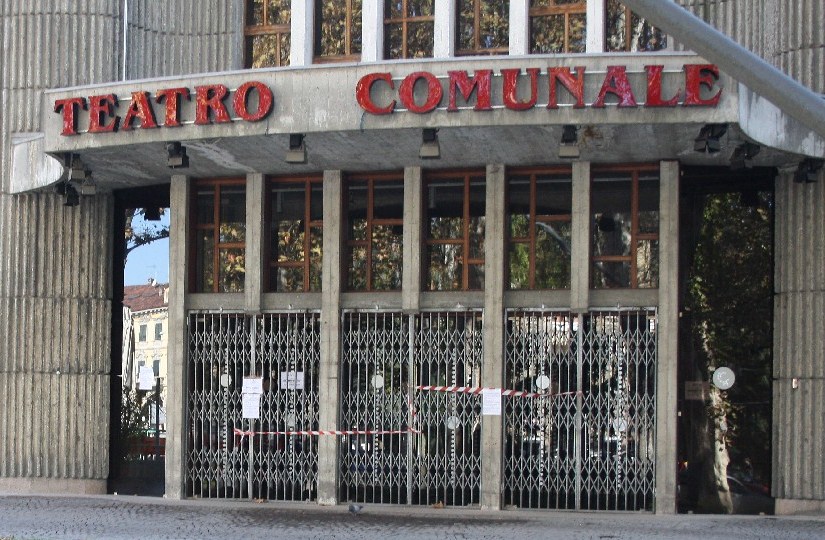
Teatro_Comunale2

Expectations can paralyse many a cause. Catering to nostalgia is much easier that feeding people unknowns.  Dramatic shifts in focus are often necessary to lift the discussion past the familiar logjams. Adjustment was in order —  some familiar words dominated the airwaves of our meeting: teatro and spettacolo were clearly being used as a shorthand.   If we continue to say and think teatro –  the only imaginable deliverables are dance, concerts, musicals and comic farces.  To diffuse this, I interrupted.  In trade lingo, we’d always talk of our operation as not ‘the theatre’, but ’the house’ – was this translatable?  Yes, in Italian it was also ‘la casa’ .  Would this help re-proportion expectations?

The strong graphic presence at the foot of the park announces:  “Teatro___Comunale” with an unnaturally large space between words.  It cries out for vandalismo; over a series of café tables we plotted a tagging design:  T-super-C, T-post-C, T-avanti-C were voiced and rejected.  My informants, more soaked in the local argot than I, had to be listened to. The current favorite, that definitely needs go before a marketing poll, simply hacks two letters out of the second word making something close to Community become Common — Teatro Comune.  No longer the municipal showcase, it becomes of the people.

Two interventions addressed the ‘model’ itself.  I interrupted: Stakeholders are obvious, don’t spend the time on this, although please note that in the unMonastery we learned to include the invisible stakeholders – the Future.  Also, the language proffered by the standard exercise board used at the Co-working Lab was too tame and academic; the flimsy claims as to moments of concern were not the language of the theatre… In the theatre we need to use strong, playable verbs to describe our actions :  You are speaking careful of tentative proposals: we need to embrace dreams…

Concretes

  1. The building has 2-5 architectural spaces that can give in the citizenry an inspiring experience of being/doing together.
  2. However the largest main spectator space , originally designed looking backwards at fallen glory, is of such proportion to dwarf any realistic use for more than 20 evenings a year (seats 1200).  The auditorium is clearly the most costly renovation project – it is also the space most hit by pollutants.  It should be possible to practically and symbolically to seal this space (for possible future use) as a monument to false delusions of grandeur.  The artistic loss would be frankly small; the savings substantial.  It can still be viewed via the solid glass window of the lighting booth.
  3. Backstage is a truly magic room that has previously been off limits to all but a handful of stage technicians and performers.  Sadly, it is likely that its full height and technically capacity has never been fully explored.  Behind the fire curtain an enormous wooden floor with a 26m high ceiling.  It itself is an inspiring, flexible space with moderate restoration expenses.  With the height and acoustic properties of a cathedral it is suited for public rituals, arena theatre, concerts, dance evenings, a specialised genre of giant puppet theatre, an aerial ballet troupe and other cultural practices yet to be devised.  Every citizen should at some juncture in their life have the opportunity to feel themselves the subject of this splendid room.
  4. A home for activist/citizen organisations, preventative active health care, media library. The building has many other rooms: offices, dressing rooms, and smaller halls that have functioned as cinemas.  These can be used to provide non-performative services where the daily human traffic can benefit from cross-fertilisation with a culture house.  An obvious example is psychological counselling where instead of anonymous, intimidating corridors, patients would be able to pass through the impressive foyer space.  **An exciting coincidence is the idea of web-based Bilancio Partecipativo (participatory budgeting) that has long been on my list of desirable unMonastery tools; apparently the current municipal government campaign with this as part of their platform.  The local BP co-ordination function would be a clear indication of the new intentions for the house; it could also function as a regional hub/resource centre for implementing BP elsewhere.**
  5. Foyer – a magnificent three story space with a glass front that lets the park in; it is currently divided by a front of house monstrosity used to keep people out!   As a first visible, public step – the ticket desk, display walls and assembled equipment now gathered here should be given to an international sculpture symposium to mark the reclaiming of the house. Material gets recycled into sculpture that enriches the park.  The foyer and several of the mezzanine balconies can form a major communicative hub for the house functions and a smoke free area for choirs, tango club, stunt poetry readings, yoga classes, an aviary, a hands on permaculture clinic, bridge club, etc.
  6. One problem and its ingenious solution presented themselves back to back:
    Would the citizens trust the civic assurances that the internal climate of the building was finally free of the toxicity of the past?  The very next evening, at the FabLab Arduino Centre in Torino – I came across an exhibit of ELiSE – environment live sensing, a technological sensor for air purity. If we can arrange a marriage of this technology to the house, it could provide both a dynamic survey of air quality and provide an app by which users can use to monitor local conditions; their anxiety can be assuaged while the house’s cutting edge tech savvy gets a strong symbolic example.
  7. Ensemble of Social Cohesion Workers – What if the building were run in a monastic like structure as a community of caretakers whose major job is to support preventative health services with an ensemble of ‘social cohesion’ workers?  As I recall, the actor’s dressing rooms are far too underground to be healthy monks‘ cells — could full spectrum lighting, piped birdsong, and water-based negative ion generators provide a conducive atmosphere?  unMonastery could form/train the host crew of house caretakers.  Before closing five years ago, two cleaners took charge of the entire house — unMonasterians (perhaps living on site) do not receive/use conventional economic resources to such a degree; for a lower cost a five-six people team could perform the tasks of cleaning crew and ritual leaders, house hosts, café workers.
  8. Possible opening project?  The unMonastery’s key co-operative organ Mazi has been approached to contribute to Smart Cities: Gross National Happiness day in regional capital Torino (March 2016).  The form this takes has yet to be decided; but Mazi contemplates holding our semi-annual gathering at this occasion.   Since BD has been asked to hold a theatre workshop in Alessandria sometime this winter, we will put forth a proposal that can combine these efforts.  The possibilities are many…
Posted in Uncategorized | Leave a comment

Revisiting Pochinko

all photos: Dawndreams.ca

It had been some years.  Many thanks to the ubiquitous Book of the Face, the past has acquired an even more tenacious habit of catching up to one.  Now, the possibility having been circulated for a good year and a bit, fate ejected me free of fancy and footloose in approximately the right neighbourhood; East would meet West in the glorious South,  I’d blow in from the North for a refresher course in the fun stuff.

Some forty years back, I’d jostled discretely in the swarm around our master.  He was good, a generous soul who had accumulated a well of secret ingredients with which we could access desirable tools.  Understandably keen to absorb such treats in our life’s journey; we did.  Our holy rituals felt very much like holy rituals.

Since then I’d been, if not a very, very devout one, a covert disciple. – I jumped when he died, but oceans away, felt no immediate compunction to further his legacy.  Except that I already had… 

My first job in the New Country fell upon me like this:
“Excuse me while I take this phone call.  An as yet impenetrable conversation of a few sentences that added distinctly local colour to an impulsive meeting with a matriarch of the West Country League for Amateur Theatre  : “Oh, that was the Worker’s Illumination Association looking for a clown teacher.  I had to tell them sorry, we hadn’t anyone like that on staff.  You couldn’t, could you?” “Well, yes, I ‘ve got previous. I probably could.” “I’ll phone them back, their office is just across the street.”   Them that have greatness thrust upon them…

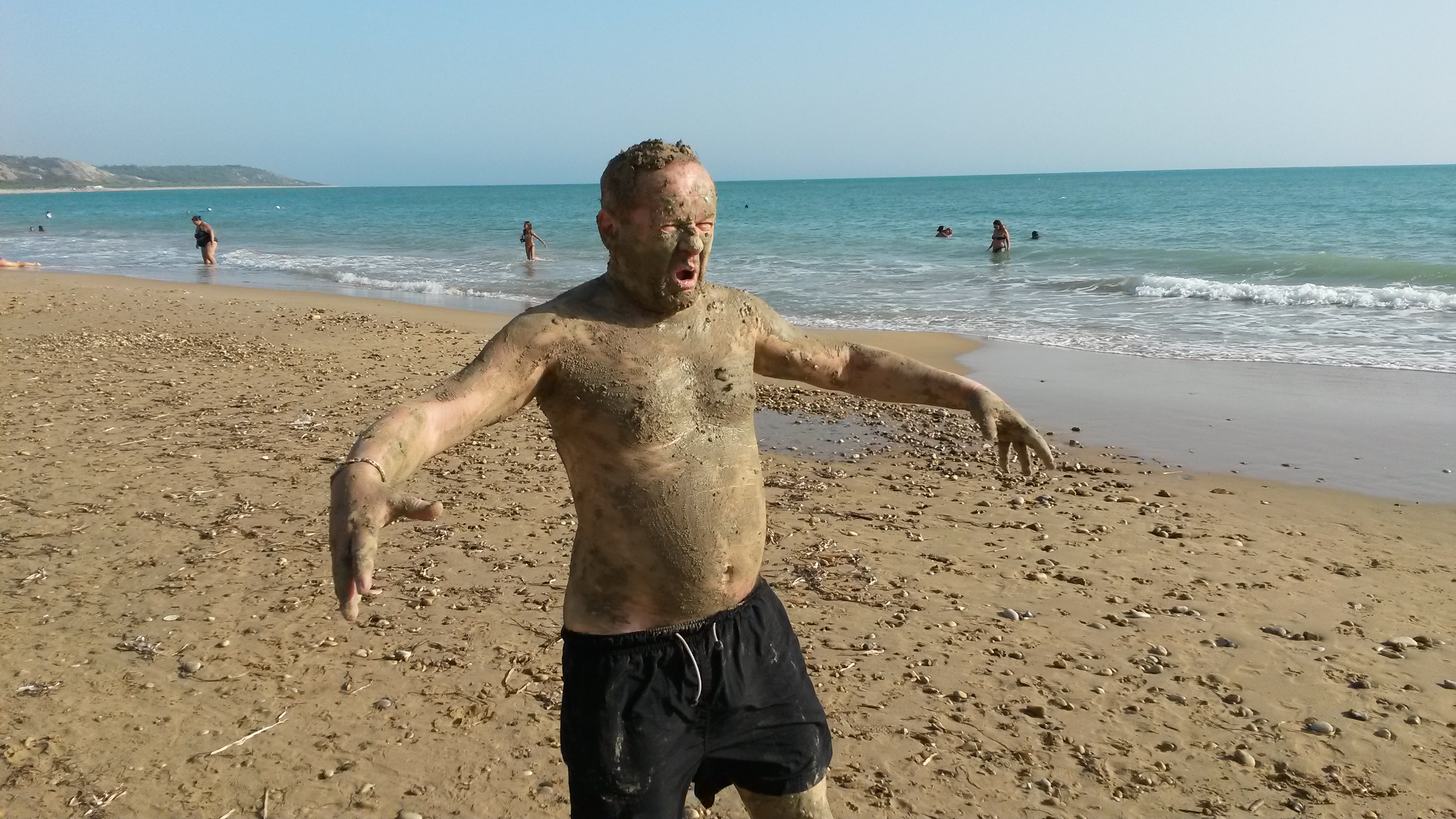
mud manFrankly, I lack ambition in this direction, it could be because of childhood trauma inflicted by a birth name that goes awry in a lot of people’s cultural assumptions.  In any case, my pedagogic arch was not lofty; not about to presume an earth shattering contribution when giants in the field were operating elsewhere, I wouldn’t be replicating the solar system during the six or eight courses with alternating adults and kids that the local demand threw my direction.  It would suffice to deliver an elemental approach to clown liberation as handed down to my humble self.  If I at all quoted my sources, I may have justified the madness with an anonymous mention of ‘my teacher’ in a passing sentence.  Otherwise, as is only right for a foreigner fresh off the boat – I said little and badly.  Any cognitive process was a private matter; the journey would not be theoretical.  There have been some triumphs; a moment or two may have furthered the movement.

Some years later the fun got a wallop.   I got exposed to those howling, intrusive types out of France who rudely pepper the poor clown with external demands.  Profoundly anti-everything I held dear from Richard’s friendly bio-organic environmental nurturing approach,  my clown could but run from the playing field thoroughly aghast.

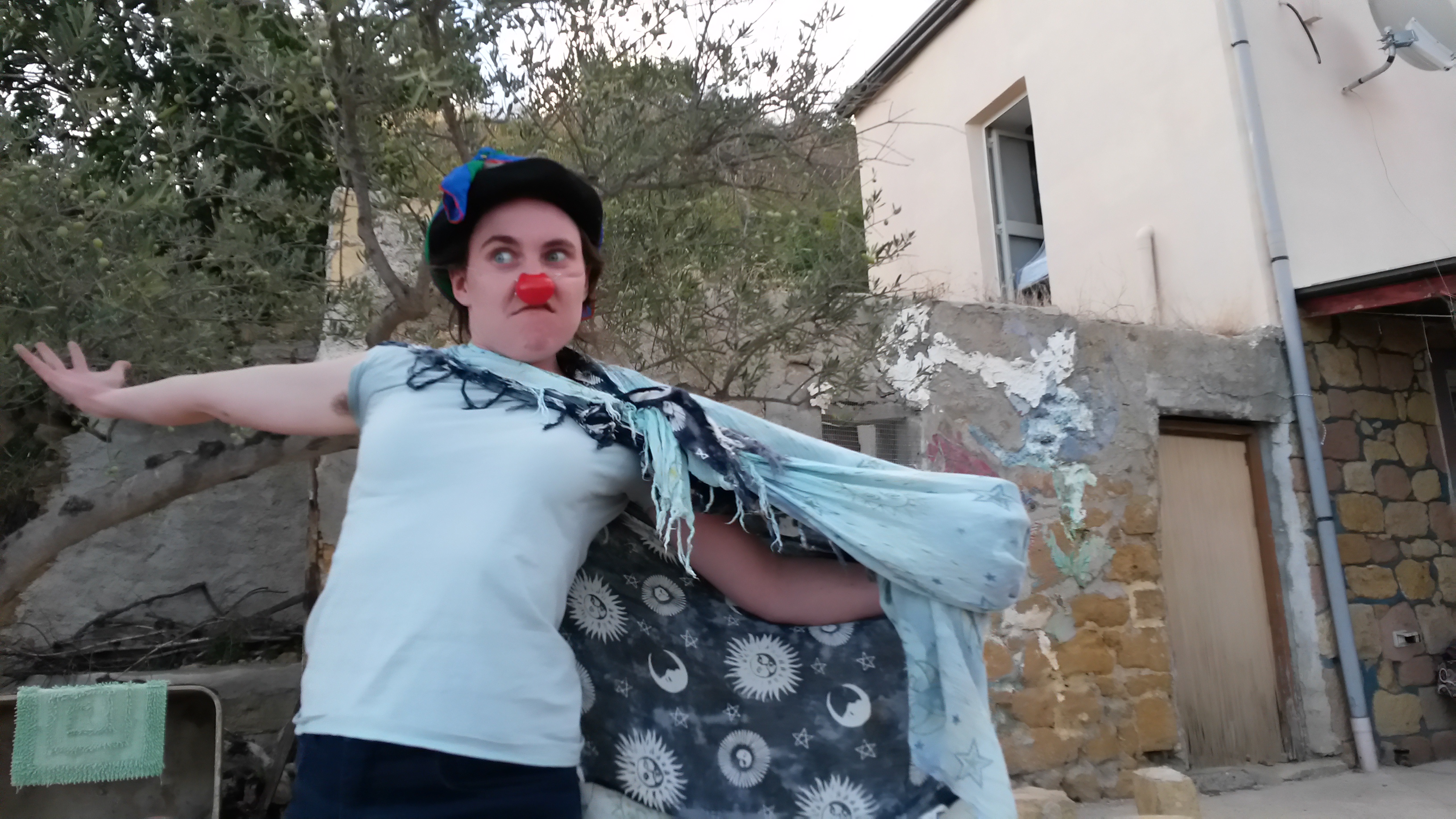
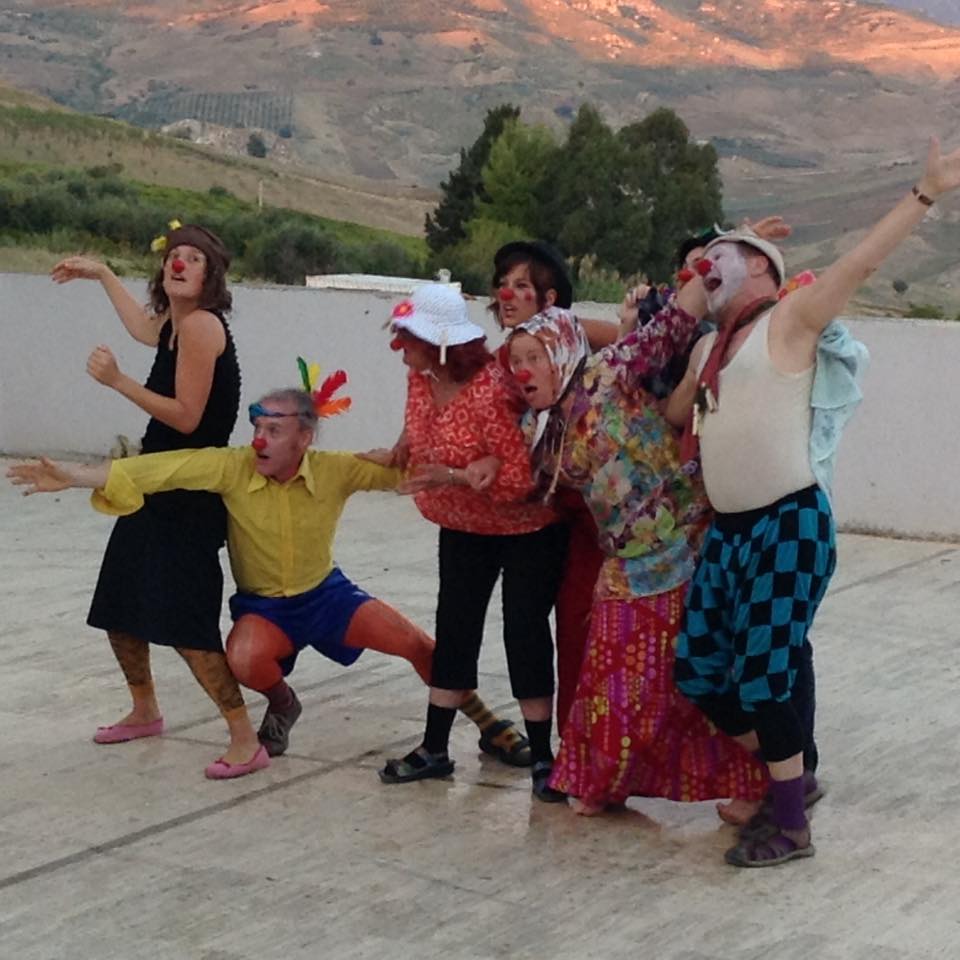
trioBy late September, the slopes of Western Sicily have surrendered their nourishment to this year’s crop – the olives, pomegranates, lemons and grapes need but complete their internal ripening processes before someone should be at hand to pluck them.
Cianciana, the hill town that would host us, was not on all the maps. (Although, due to the particularities of branding, I did notice that the likely smaller village of Corleone in the neighbouring valley repeatedly merited a mention.)  This year a crowd of mostly unknowns to me would gather; ninety-five percent of the correspondence dealt with the whats to bring and hows to get there, the accompanying decree of artistic intention may have passed me by…

The Great Richard Pochinko Workshop of 1974 was perhaps unique.  Two solid months at home base before two weeks fieldwork getting our socks wet as part of the Royal Bros Circus crew.  Clearly North America’s most moth-eaten remnant of the Big Top tradition, our embedding would be a clash of cultures.   At home in the National Arts Centre, our preparation had been somewhat more meditative.  Veterans and newbies alike would explore the colours of mask trance and element baths, gingerly absorbing these layers into our sensitive clown personas.  It was an orchestrated meeting with the self in the safe room before the audience would show up:  the upcoming rude awakening in the centre ring would be indeed a rude awakening.
(Might Paul Saltzman’s film program be on Vimeo/YouTube/NFB archives?) 

I was double booked on my journey; held up in Athens, the currently besieged capital city of one of the many ex-colonial powers that had once claimed Sicily as its turf, it was politic of me to trade one of my standard miracles at the pre-conf practical workshop, if I could skip the drone of the paper givers.  By the time I arrived in Cianciana, two actual working days in, the clown crowd was focussing intently on inner resources.  The day before, an existential crisis of ‘what am I doing here?” had assured that no one would lightly return to such inquiries in the conceivable future. 

We had also been farmed out en masse to a very effective community relations wing –  suddenly three ‘meet the locals’ gigs tumbled vigorously into our collective lap; this might be an experimental exploration of core techniques, but it would be us who were the guinea maskpigs.   A residual question niggled: would I have a genuine rekindling my roots, or had the tree been so consistently grafted as to bare strange fruit indeed?  Nearing completion were a collection of oddly reminiscent distorted mutant masks that could frighten many a small child.

It is a central wisdom of pedagogics that everyone teaches through their own neuroses. Teachers of clown being called upon to be more neurotic than most, it became news to me that there have become more keepers of the Pochinko flame than the obvious suspects of my generation.  It seems my dear master has become a veritable industry with people brandishing not only his System but also his Method.  The wincable wince; then we get all understanding.  If I can contribute anything at this late date, I’d suggest his approach would be better described as a Strategy.

Brother Ian is old school – he had always been there, he had absorbed the wisdom, he practiced the practice.  He may also be the most intuitive person I’ve ever met.   Intuitives rarely operate with a strategic filter.  They know stuff; it is not necessary to understand the whys and wherefores, things just are.   In clown, he was perpetually astonished; the world happened to him in a flash.  The palms of his hands turned out in pure innocence, we were to share his amazement.  He could not connive; it would be hard to imagine Ian’s pedagogical plot ever thickening – he gives what he has.

We are not the same creature: if you roll a marble into the intuitive Ian machine it would zip through instantaneously to emerge all marvelous and sparkly.  That same marble rolled into me would trigger one of those exceedingly intricate cause and effect contraptions that engineer kinetic artist types float on the YouTube.  My love of resistance, teetering, angle of incidence, expansion, the fiddle, arch of inclusion, friction,  domino theoretics, and disturbed waddling ducks inevitably suck all my attention.  If I get lost on the way, I hardly notice.  Fascinated by the minutiae of pure invention, the whereabouts of our marble by now a forgotten detail, any observable product is simply a by-product of an honest journey; profoundly valuable fun gets had.
Self-diagnosis is risky business: my neurosis was once called ‘paralysis of integrity’ (other phrases have been used) – let us say that from a militant actor’s liberation perspective, I am reluctant to risk muddling and would rather leave well enough with the free supported space to figure things out by themselves.

mud people

I was moderately taken aback at Camp Cianciana.  Freshly plumped down in a chair for my first cup of locally brewed tea, some of the mask pasting types were sent off on a scavenging trip to the clothes cupboards.  To my ears this was shockingly off-handed — a deeply treasured precept of the work I’d learnt was impertinently swept aside.  Can it be that the realities of modern teaching market could dictate ones adaptive neurosis; that the pressure to get things done invites short-cuts?  To my orthodox upbringing this struck me as painfully – for want of a better word – wrong.  Classic Pochikoism proffered a technique that I always held as a pillar of the process:  Objective esthetic considerations for sculpting designer clowns have never been in our immediate cards – the impulsive infatuation with serious bad taste may often be just what we’re looing for; hence the recipe:  ceremoniously enter your mask for the first time, ritually perform your morning ablutions, and only then head off to the shops.   ( Indeed, during my above mentioned earliest teaching foray, one most attentive student so embraced this ritualised approach to discovering ones outfit that she ecstatically returned from amongst the flying elbows at the collective rummage sale absorbed with a most delightful plastic bag. ) When the work offers a path that consistently rewards with miracles — opting for a labour saving compromise seems more churlish than inspired.

My only notes from the time of this rude confrontation reveal a deeply troubled being:  faced with the most presumptuous of exercise titles ever ever- the Ultimatemelons Clown – my bowels baulked.  While an acute, realtime pain in my right buttock didn’t ease matters, some kind of hubristic überimpulse was here promising us a visit from the almighty Gods  — deliverance was nigh.  Something stuck in my receptive matrix…

In truth, the offending phrase may very likely stem from Richard; though of course he wouldn’t put it quite that way.  Chronic four-year olds don’t do hubris.  In the guise of his particular neurosis the sheer glee of opening such a birthday present would have blown to smithereens all my silly little details such as can there morally exist such a creature as absolute ultimateness ?  He would have reveled in the pure delight of the possibility of the possibility. 

On their way to becoming certified terminology other Pochinko observations seem to have met a similar fate:  I had met my table companion before; erudite, effervescent, tactile and female, I was inclined to absorb her retirement plans – save for one detail. Oh, she’d been pursuing clowning á là RP – now she had graduated to ‘Baby Clown’.  This too formed an unwelcome clump in my earhole.  “Richard never said this” bubbled unsaid up inside me.  Save that he did – perhaps more than twice…

Thing is with child rearing, one can tread overly careful.  Modern parents get labelled many things; on a range that includes: fussy, stern, protective, most begin with overly.  Let it here suffice with overly-engaged…  In the hands of the wrong neurosis the ‘baby clown’ approach can intrude upon a lot of tumbling territory.  The horrors of a big North American city daycare facility may not have such common roots with the upbringing of a post-war prairie farm boy.  If Richard said ‘baby clown’ he did so in the persona of a moderately older brother: he was delighted, he was inordinately proud of his sibling, there was no way he was about to change a diaper or offer deeply reasoned child-rearing plans.

As neuroses go, constant delight is singularly palatable.  As a currency of instruction it is hard to do overly gleeful.   Accompanied with curiosity, and the belief that the next breakthrough would be the best yet – he left us alone on our journeys.  I cannot recall a barrage of helpful noise from his direction – more than perhaps comments of short, clear encouragement.  Much as the rule was not to speak in mask nor nose, my recollection is that we were only exceptionally spoken to in mask or nose.  (Similarly, adopting the foreign idea that we had such a fear of open spaces that a directional beacon of drum beats should reassure us that Mummy/Daddy was near, is to risk clogging the airwaves.)

Instead, the bulk of Pochinko approach was front end. Not recipes and technical tricks, but preparation.  For those of us who arrived somewhat post-infancy from the adherent discipline of acting this was inherently logical.  Character work was best refined internally, growth was organic.  Respecting everyone’s developmental curve in an esthetic that held that own discovery was infinitely more valuable than responses to result-oriented prods. The value that so permeated our sessions was a profound faith in the process.   Process was everything: assemble your tools, check your alignment, and head boldly off upon the voyage; rewards would be forthcoming.

oddrei Of course, this may have reflected the working conditions at the Ottawa gathering of ’74: we were a large group (27+?), more than several showed signs of adulthood, 70 hour weeks were the norm – teaching could only be approached tribally  The group worked in sync: mass suggestion and collective ritual, assembly line individual work, interwoven private moments.  If we dispersed, it was to gather nourishment for the whole.  The quietest moments were filled with the endless communing of paste brush with paper as we constructed our string of six concentric masks.

Our current workshop couldn’t be so meditative.  Squeezed into that thin slice of time between when the daily bake finally allowed you to both think and stand upright and when the global lighting system disappeared beyond the Sicilian hills, we had about two and a half hours for concerted cavorting with the Gods.  The rest of our desirable internalising of the elements of all creation would bounce directly off each person’s catalog of childhood memories:  steep dusty hills, freshly fallen fruit, grazing herders and their beasts, fish in the swimming pond, the business ends of oh so many biting insects, and vista, vista, vista.  Immersed in all this, we had little need to conjurer up a magic space.

horse+                                                                                              

As I received it, the approach to clown through mask had a simple formula: stimulate elemental connections with the forces of life, invoke shamanistic trance openness, indulge in the presented whims offered us by the greatest mask of all – the audience.

New to the cognoscenti since my previous exposure was a switch in mythologies governing the six mask progression: the classic philosophical  Mediterranean quartet of four elemental elements had been replaced by a sextet of directional forces from the hereditary thought trails of the first N. Americans.  I had missed out on this re-wiring and the days of fasting, chanting and dance that no doubt accompany this.  I’d bravely brave a refresher course, but the Cianciana work proved less a measured exposure to inspirational ideas, and more an immersion in raw playing time.

photo: sara tilley

photo: sara tilley

If truth be told, I had descended with a vague lust for rekindlement. The premise of the workshop may have been a cost/gains analysis of the wisdom of compressing the meticulous process of exploring  multi-facets of the self into a quick-meal of six-in-one.  Other more pressing matters may have intervened, but Pochinkoists know their neutral and new beginnings, a renewed connection could take many forms.

The clowns met a lot of people often:  clowns on street, clowns wading through rows of preschoolers, clowns as circus gladiators battling off the hordes.  It would provide a breathtakingly brave learning curve for some.  Others relied on the pathetic old hat; the age old glue of clown life remaining as always rhythm, gag structure and spatial choreography. Permeating our final scheduled performance that politely coincided with a very fullish moon that later that night blossomed into a seldom fabulous lunar eclipse, was a bravery and commitment to subject oneself to the ‘audience mask’ of tribal passion.  It became a dangerous meeting of bare hands and the mob; this in a land where many a grape had been thrown before now.  That we emerged triumphant seems all part of the process.

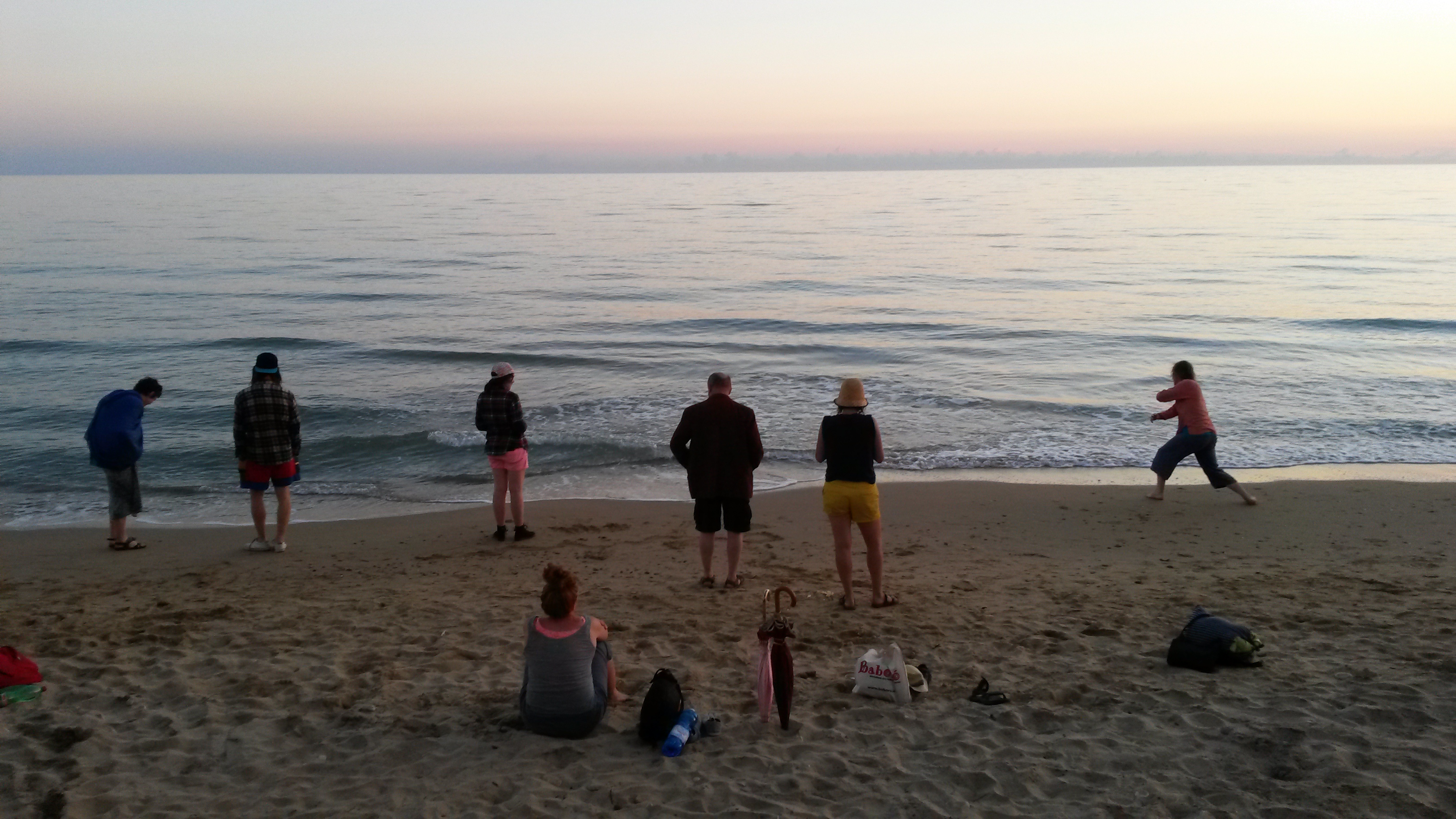
Conversation with Ian Wallace in the taxi on the way to the beach, final day:
Was it so that we were taught that in the tradition we sought to emulate, the wooden mask was carved into a living tree, and that once removed, the tree was ritually sealed with sap: its continued growth vital to the power of the soul carved out of it,  – or had I been feeding impressionable co-workers an attractive myth?. — OH yes, this was a tenet of that we adopted – hence
you made youpepplesr mask of clay that I’d hand dug in the ravine. — AH, so my impulse to cast a mask of onion skin responds to our tradition, for although I once reveled in a mask of food wrap and masking tape, my prejudice in favour of all-organic materials reflects this – hence the choice of aquarelle over acrylic, and my eschewing plastic noses in favour of starting all groups with an opening sewing circle for creating self-styled cloth noses   Hmmm Interesting – said Ian: I must make sure to get this in the book. 

A colleague took me aside to confer about her recently completed class.  She had once been the best kind of course participant:  one that remembers her old teacher and recruits him for a fully paid adult position at a stage in life where a year among the salaried, teaching things I care deeply about, wouldn’t hurt a bit.  I was plodding around in Shakespeare, she had her group approaching clown.  Her triumphant story was about an exercise involving a spatial voyage through three imaginary worlds to a place where one finds a magic object that one then returns with through the same three worlds.  I expressed something like understanding or approval; she wanted something more.  She asked if I recognised it, but drew a blank: apparently she’d done this with me some fifteen years previously.  The marble dropped.

clown beach

Posted in Uncategorized | Leave a comment

Stella Polaris — infectious generosity

Stella Polaris street work

I sobbed deeply at the theatre yesterday.  It has happened before, although twenty years in the wilderness is a long time to be left yearning.  Then, as now, the criteria was not incessant brilliant invention, nor some external esthetic cleverness.  The element that so moves this over-exposed theatre veteran is a variant upon pure, wise good work. 
That this is accompanied by the sheer stubbornness of the practitioners who insist upon addressing deep theatre truths despite the threatening clouds of an engineered cultural austerity, may not have been a coincidence…

Even in the unconvincing local excuse for a summer, a very human impulse to free life from the confines of ventilation duct and light socket dependency displaces people into any available patch of nature.  Stella Polaris have been feeding this impulse for thirty years; they meet a pressing human need.  Locating themselves upon perhaps the rawest, least commercial plot of land they can find, their work is consciously and adamantly naive.  They employ no nodding distance, conceptual adroitness, bitter irony, nor indeed doubleness of any sort: what you get is what they give.  They give a lot.

Their annual summer solstice gathering is now held by the grave of Olav Bigbones, a Viking king whose burial goods and war ship have also fallen victim to the fashion of cultural centralisering.  Wedged between motorway and railway line, only his empty mound remains surrounded with just enough sanctified grainfields. (Most of the locals I quizzed had never stopped to read the info-posters – including a report of recent forensic examination that reveals that the man himself suffered an unusual genetic abnormality that justified both his name and reputation.)

As fitting such an environment, human sacrifice was involved.  The juvenile participants being worked into the flows of the troupe’s ritual for their first year were not merely added colour and body count…  Their contribution is a prerequisite for the next layer of the pyramid.

A free event involving 10-15 core group members, augmented by 50-60 appropriately costumed workshop participants aged 7 – 60, could legitimately been boiled down to a symbolic, superficial affair with a subtext of not much more than: Isn’t this lovely fun? 
We would have been thankful enough for the 20 minute ritual prayer to the winds, but that was just an opening statement of intentions.  Stella Polaris weren’t just going to artfully indicate the significance of the occasion – they will precipitate it.  Their belief in personal energy transformation and renewal is demonstrably non-fiction.  Over the next three and a half hours they would unfold eight times as much material in seeking to blast a hole in the firmament that might rebalance the universe.  This cannot be subtle. 

The theatre of Stella Polaris is tribal art; it is not modern interpretive expression of the individual.  The dynamics of this incarnation of their street pieces build upon the infectious glee of mastering physical challenges.  The story is that of the assembled ‘us’; there can be no stars.  Carried by the power of the ensemble, the individual foot-soldier is mercifully expendable; everyone contributes their very best, the tribe prospers, as participant  you emerge with unique capacities to engage with your surroundings.

It costs: the team sheds; a newly expanded supernova cannot always thrive during the winter of grant applications.  SP has spawned satellite mini-projects; market-tailored one or two person story-telling meteorites that reflect the mother troupe’s pre-industrial themes.  As theatre, these don’t always do SP proud – the skills of the street may not completely inform the skills of the bonfire; deprived of its drumbeat and vocal wall of frenzied supporters, the acting can seem untutored.  However, skill level is not about skill level.  It is about acquiring fresh powers. The explosions which highlight their performances may not be honed artistry, but rather more basic human raw materials: glee, conviction, belonging.  The solos can easily vanish in the whirl – they are not the point. 

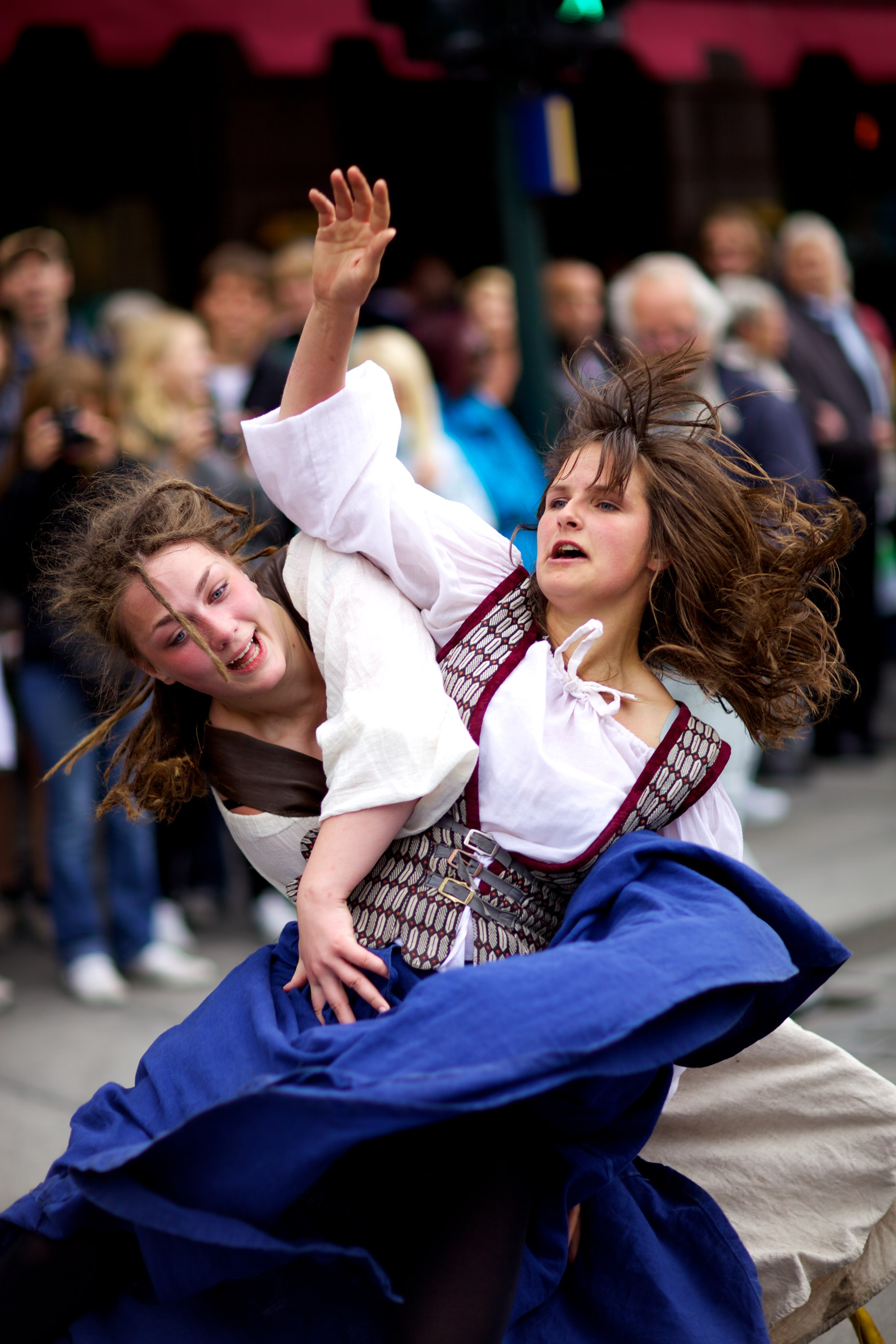
SP have a few well-worn tricks: their pieces don’t stay still.  Building to one crescendo, they shift space every 12 minutes: launching the phalanx of their parade right through the established centre of the action they fold the audience back upon ourselves.   We, the spectators, scatter in self-defense; free to renegotiate our relationship, we inevitably gather closer, and more eagerly.  The SP dramaturgy rarely uses silence – transitions are grabbed and squeezed for all they are worth.  At each juncture, a seemingly well-aged routine captures the air: snippets of forgotten songs in many languages, circus leaps, flags and fireworks. 

If Stella Polaris do elegant transitions it is accidental.  At the pace they operate, they don’t supplicate their art to the Gods of Esthetics. Rather they wrestle esthetics into irrelevance.  That their costumes are not new, the choreography predictably unpredictable, the scenic elements recycled, is not a minus.  People are gathered; fresh souls grouped into five totem clans are making fresh connections with their inner powers…

Their trademark magic ingredient is the fresh blood of unfolding youth — traveling with an ensemble of seventy isn’t always possible, the SP nomadic workshop is the perfect solution.  A certain percentage of those on stage look very familiar indeed – three days of training in songs, dance, and the demolition of personal boundaries is all that is desirable; the trial by fire of playing before your own people gives the performance that extra edge of the impossible.  When twice things sagged, the troupe has its primary matriarchal pillar who lurches forward with her accordian to carry the company over the breach of a choppy transition or a faltering tempo (often caused by a moment of disbelief in the miracle of it all); she whips the energy back up a notch in a patchwork of song snippets or discordant harmonies applied as well placed encouragement.  We must climb further.

Contemporary theatre doesn’t always love anthropology.  The fact (disputed by some, though never by me) that we have performed theatre rituals to transmit key survival skills from a time that pre-dates human speech, puts enormous demands upon those who dare take their responsibility seriously.

If Stella Polaris is not unique globally, one must travel as far as they have. (The revived community rituals of some Pacific islands come to mind.)  It is definitely a unique national cultural treasure in Norway.  The way has been hard.  They don’t fit in the current assessment of the non-hierarchical marginal theatre/performance concept projects that equates innovation with youth.  Stella Polaris is not about innovation, but rather renovation.  That the core strength of their work has evolved through the distilled wisdom of life-long journey as lovingly and nakedly commented by Per Spildra Borg.  In his ‘Life Theatre’ brochure documenting their achievements and influences these first 30 years he documents a profound meeting; Per travels upon belief more than administrative guile.

At the Gokstad burial mound, SP were accompanied by an odd grassroots movement of some six couples of tented pensioners.  Suitably garbed in hand-woven finery, they set up camp with a lived-in museum of Viking pastimes and handicrafts.   The young and their elders provided an ideal amplification for one another.

The political ups and downs of the theatre industry periodically strip the troupe of its momentum.   SP can never be project theatre:  it is a school and a lifestyle.  Young people fall through the doorway – become altered for life and grow unto the point where they must expand their search.  That which is SPs immediate loss becomes culture Norges gain.  Ex-ADHD patients having survived the initiations rites and partaken of cultural exchange at the far reaches of their known world, reappear as familiar faces on children’s television and the pop charts; satellite theatre troupes form.  Periodically, elements return to the mother group for massive projects, such as the 2005 Poland tour of The Ship of Fools that put 25 people on stage.

The physical/vocal work that the Stella Polaris tribe embraces is infectious. The SP performers speak their own language – they don’t ‘do acting’, but unlike the other performance artists of their generation, they don’t do measured minimalism either.  If anything, they do ‘maximalism’.  In the SP school of generosity, they emit pure energy; they give of themselves.  Dramaturgically, the summer/street pieces are not sophisticated:  they establish spatial focus through a mass song or direct speech, and then explode in a barrage of colour, sound and acrobatics.  Their stories are subliminally about ‘us’. The sub-plot of every SP show is the same: we are those wonderful pure souls that you read about, our friendships have enabled us to explore our limitlessness, with the help of the audience we will become even more deeply human.  Almost always, the not-so-secret ingredient is fresh local blood being astonished as the repertoire supplied by the scattered veteran core members in their midst, carry the newly convened group to areas where they palpably overcome themselves.

It is not the fashion of the art industry to speak of culture as social therapy.  Such things may be frowned upon by the café crowd, but the proof of the ensemble may be felt behind the scenes as well: the SP young people don’t flutter on from their dirty plates after meal times.  They cook, and de-rig and care for one another with the same attention with which they build their performances.

Stella Polaris’s is an unusual virtuosity.  One brilliant human is immaterial; in the Theatre of the Mob the art lies in gathering the masses:  seventy is truer than twenty.  Their language is simple:  infectious generosity.

Posted in Uncategorized | 2 Comments

Life after Jubilation

17.otto slap Mission accomplished. The visionary brand-name of Edgeryders, with its funky hipster avant guard flagship ‘The unMonastery’, may have just tipped the scales.  Our investment at the cutting edge of international co-living asylums for burnt-out geeks has turned into the major ‘Culture First‘ breakthrough we all had been dreaming of.  A calculated miracle fell miraculously into place.

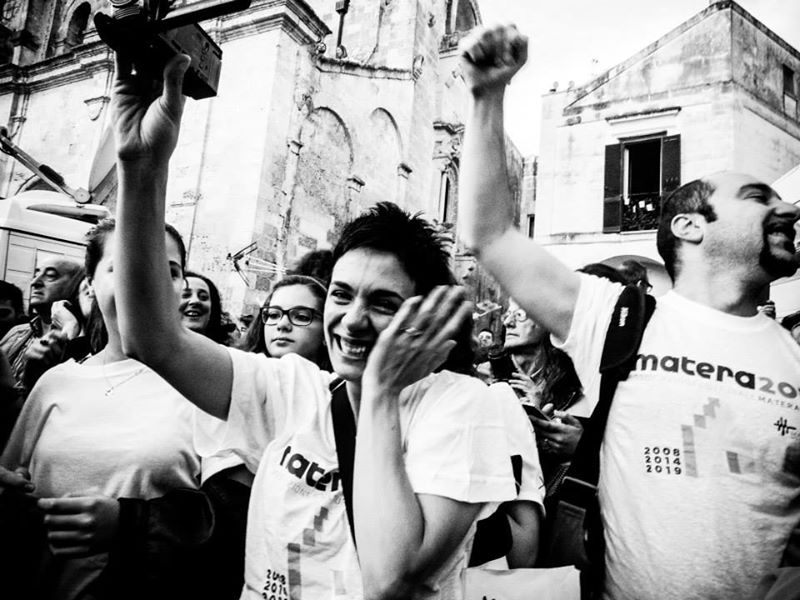
All of those who gathered in Piazza San Giovanni on the afternoon of 17th of October, 2014 have already forgotten the torturous introverted minutes absorbing yet another delay in the transmission program that would announce the most worthy representative for Italia’s capital city of European Culture. It wasn’t that pleasant; we each inadvertently prodded our individual sack containing a life’s assortment of disappointments. That said, none of us will ever forget the three minute visceral howl of exultation and of belonging among the chosen that shook the walls of both the town and its people. The we won. The campaign of buttons and banners, a bombardment of civic arrangements, of intricate consultations and rebellious citizens convinced a gaggle of international culture aristocrats that the City of Matera would host something worthy.

MA 17 otto hug

My personal esultanza was shared with a gang who deeply deserve the ‘Open Future’ promised by the cultural program. When the clever idea of an open citizen’s buffet lunch for the visiting jury members was brazenly stolen by big brother Lecce for the previous stop-over; the local bid workers had to think fast. It was one thing to meet people on their piazza – how about in their homes? The call went out for volunteer families to each host one of five visiting commissioners. Sixty responses flooded in. A second call went out – you unMonastarians are esperti in the ‘free lunch’, could any of you impersonate visiting dignitaries? Marc bowed out, tomorrow was already full; Katalin got the straight forward gig as additional guest around a big table in Piccanello. Bembo was earmarked another task: Bambini Day III – Casa di Robin Hood, a local children’s home for hopefully temporarily indisposed families wanted a distinguished visitor; who else could possible fit the bill?

Visit number one went according to plan. Eating, gift exchanges, a pleasantly parasitic local TV crew that got us on the marathon coverage, and then a quick retreat in time to greet the jury back at the unMon. Warm, not too wild, certainly wonderful.

The real key was visit number two. The days were full. Faced with a limited time on earth, how could I honour their plea to be more than just another photo op? 
One has to eat sometime; the free lunch was established routine; the big gathering on the piazza to meet our collective fate would need some serious ballast to absorb the liquid solace that seemed statistically on its way. In addition, I was breaking in the latest fashion in unMonastic understatement – our habitual scarf. It would prove a big hit.

Google maps wasn’t helpful, Philomena was. I arrived on the stroke of two and humming a merry tune, scrambled up the stairs. A box of gelati exchanged hands, other hands were shook. However, suddenly feeling hatless, I stopped the ceremonies to tie a knot in one end of my precious new scarf and encircled my head with a dashing turban. I could then assume what had become my traditional place at the head of the table.

Things dragged on a bit. Two staff members had yet to put in an appearance. As course number four was put to rest, a scarf party was instigated. Holding an impromptu workshop in turban binding can now go on my CV. One pair of eyes misted over as big brother reclaimed the house’s best scarf; I volunteered mine. Variations led to variations; soon everyone was suffering a broken limb that was badly in need of a sling.

The talk of the town and our dinner conversation was the imminent announcement of the contest of the century – had little orphaned Matera a chance to outreach certified heavyweights such as Siena, Assisi, Ravena? The kids had been recruited as local witnesses – there was some doubt as to whether braving the crowd in a limited piazza was responsible minding. At any rate, I was going the same direction, let’s grab our flags and take our chances.
Not every outing is unlimited fun. Keeping in line is keeping in line. To inject a rationale for our ordered parade, I suggested we do a marching band. Six voices could churn up just enough din to raise a few smiles as we transversed the traffic flow. When eagerness for this game started to flag, I introduced the ‘Pausa’, an energetic explosion of hip gyrations to a different beat that whipped up the tempo and hilarity levels. We took quite a few pausa.

Before we parted ways in the crowd, and they sought refuge right in front of the stage, we were warmly welcomed by first Rita and then Ilaria who ran off promising them buttons. She didn’t come back empty-handed: no buttons, but T-shirts that fit at least the three youngest.

MA 17.otto buds
The myth will expand, far more people will have witnessed the day than Piazza San Giovanni could possibly ever hold. As the envelope was opened and the only word in the world we wanted to hear was uttered, a huge psychic lift from a down-trodden region was celebrated in the only way we knew: tears, endless hugs, howls.

Proclaimed by some archeologists the third oldest city in the world, Matera that had never won anything but derision and the attention of invaders, was at once vindicated.  To be declared Euorpean Capital city of culture was perpetual – the honour, even when following a stream of other not entirely visible treasures such as (Mons, Pizen, Umeå, Paphos and Leeuwarden) could never be retracted. A regional big brother had been revealed as a bluff artist. The relatively recently established ‘Italian’ nation had been surmounted by honest, visionary work. The infectious glee that took hours to sink in would shake loose centuries of repression to the sound of a stream of increasingly entertaining orchestras (likely discretely briefed beforehand on their duties as crisis psychologists should the bid fail and we fall to licking our collective wound.)

MA 17. ottobre

However, all is not well in the city.
Vanni’s reaction to the win was that of all aspiring upstarts: quick sink your money in hotels, put out your nets in the swelling tourist stream. Not having the heart to crush his calculations, I heard him out. He recognised that his land was only a few decrees removed from the Greek Disease. If he was to at all remain positive, his apparent window of opportunity was immediate and frustratingly narrow. He had to jump. Now.

But other things get whispered sottovoce: somehow, somewhere in the ‘Open Futures’ cultural project design that carried the day, the future is not only outward facing. The challenge it also presents is to open and enter inwards. The glorious triumph can of course further subject the region to becoming servant classes to the parade of national and international petty criminal baby-boomers who have fiddled the system into funding their inadvertently greedy retirement schemes. However, there is a more profound reading of the Matera/Basilicata win: as the global economy shrinks around an inflexible, inflated productive capacity – the reality of the region’s short distance to fertile fields will reassert itself. If they can pause to redefine the tight knit family model that holds the percentage of highly competent women out of the formal workforce at an archaic level, a new social economy can be negotiated without succumbing to the frustrations of media inspired myths. At whatever the level that the social/economic collapse hits, the Basilicata region offers a model for a partial strategic retreat to the real economy of the past. Redefined as a life belonging to one of the few resilient societies that can negotiate a lifeline to viable subsistence, joyous frugality, and a balanced plundering of global resources, they can both refine and export the future we all desire.

My 15 on-stage seconds in the limelight to acknowledge the unMonastery contribution could be shared with the smallest circle of the crowd, hugging the stage, far left. We even had our own special choreography for the occasion.

Posted in Uncategorized | Tagged , | Leave a comment

Militant Reluctance – A People and their Myths

MA Buna - Committee on Steps

A mystical backlash accompanied our presence in Matera.  We could profess our innocence of any imperialistic ambitions, but a significant segment of the population stood against the very existence of such a foreign entity as the unMonastery in the primo real estate of their city.  Days after the first unMoaner souls set foot in the Mediateca to make our fledgling inquiries a video appeared on the YouTube purporting  to cover the existence of a serial killer preying upon unsuspecting unMonasterians.  Even those whom one could consider close personal friends could embrace you as an individual while repelling the very idea.  The Materani would proudly be a hard nut to crack.

Having made a study of the congenital Canadian twins of anti-imperialistic resistance and provincialism, it was possible to slice the cake generously.  A people beset by waves of historic opposition could legitimately harbour skepticism, but had not the modern love of ecclectical cross-over and globalised culture made it to these parts?  Were not we unMonasaterians a blessing that would help lift clouds of inbred mutual self-censure?  Would the manner in which we embraced one another in-house echo the manner in which we were embraced across our interface with the locals?

We weren’t the first wave of upstarts.  Centralised governement had done its well-meaning cynical best.  A region whose idealogical composition had consistently voted far to the left of the hegemonic coalition clusters that had hampered the country for 60 years would hardly be rewarded for its loyalty.  At best they would be treated as an eccentric uncle with hygiene issues – if there was hard work to be done, they’d get the nod, but they were not to be invited to the prettier feasts.  Resentment became entrenched.

Perhaps the foulest rejection was reserved the least cognitive invaders from the North.  In times of plenty, these would claim a familiar, cultural bond between all who applied the same postage stamps.  However, obtuse Northerners would never quite grasp the allergic reaction with which they were not embraced.  Even when the ‘foreigner’ in question was genetically a re-immigrant, removed from the soil of their ancestors for no more than the generation necessary to befuddle their dialect, the atmosphere at the frontier could easily turn toxic.  The pain of cycles that exported favorite brothers to greener pastures sat deep in those left behind.  Among those left behind, fierce civic pride guarded the primary virtue of survival.

The central myth of Matera is Madonna della Bruna.  Every year exiled citizens flock to their ancestral home for a reenactment of an historical event.  (See my Rehearsing Police Brutality with Andrea Semplici’s striking photo essay.)  The detail in the day is glorious; however, no one can convincingly articulate its deeper significance.  Why must the magnificent, beautiful ‘caro’ be torn into pieces?

In the political climate fought out between the squadrons of social innovators and cultural preservationists in Matera someone would always be the victim.  Pomp and self-glorification would be inevitably encounter bitter reality.  The battle cry of ‘Death to the State’ was hardwired into the neurological pathways of the man in the street.  Every magnificent idea paraded in from the North was viewed as a caro; without even having to assess repercussions, the caro was to be demolished.

Posted in Uncategorized | Leave a comment

The Wow of Chastity, Frugality & Obedience

MA mealtime

(in the run up to the beta version of the Book of Greater and Lesser Omissions – several items that are more internal than informative are being temporarily parked here in full public view. Please excuse me.)
Reprogramming Individuality
Urban life is trying.  The rhythms, tempo and volume to which many of us subject ourselves is hardly healthy.  The tricks we devise to survive are scarcely inventive — human wiring provides us few alternatives but to be full of ourselves.  Nature makes us borderline social basket-cases.

Choosing to leave behind such a constellation of adaptive devices in favour of a renegotiated collective lifestyle isn’t done lightly.  Leaving one’s core self behind is just not done; despite our best of intentions, we drag great mounds of our most unAppealing habits with us…

It was written in a format that doesn’t survive translation that the early unMoaners should receive an intricately devised cyclical wine ration that had them with one glass or two for three days a week, with a whole bottle every other Saturday, but with the interim days dry.  None of this became unRule.

It is not a minority position that injudicious drinking habits depleted the integrity of the early unMonasterians.  No matter how desirable, periodic emergence from our cloisters to partake in the pleasures of the local night life would not go unObserved.  Intemperate levels of inhibition release combined with unMo standard levels of sleep deprivation depleted attention available to morning practice, intelligible meetings or Italiano lessons.  The generosity of our guests descending upon us with their family’s liquid finest left us with unScenic mountains of recyclable glass. 

Arriving back in town at the end of June*, to be greeted in town by the rumour of the unMo’s incarnation as a study centre in, at best, a mild form of debauchery, was beyond disconcerting.  The ensuing meeting, held it seems under a cloud of adherent guilt, spontaneously decreed that henceforth the unMoaners should limit their intake of C2H6O to three days a week… 

The speed with which this decision was subject to creative interpretation could make the staunchest of us unRuly.  Our meeting being held on a Thursday, the immediate week in question held but three days as eligible candidates; (Sunday is inconveniently a floater on some calendar systems, and was therefore placed in zone libero.)  Forgotten in the mix was an implied consumption cap.  Quality failed to negotiate with quantity:  granted but three days, one should best thoroughly explore the far side of sobriety flat out before the countdown of the new week beckoned.  Needless to say, elements in the cultural calendar decreed that this proposed policy evaporate as soon as possible…

  • Described by some as “The Stone Age” this apparent nadir in the unMonastery history reflects the rather incongruous, retrograde exploration of a social experiment whose results many thought were tabled years ago.  
    Cannabis has without doubt value in symptom reduction with ailments as variable as epilepsy and arthritis, but these are by and large ailments of our dotage.  For able-bodied youth such indulgence seems incompatible with the unMonasterian ethic of ‘doing’.  Anyone with extended practice in the collaborative arts (music and theatre come to mind) recognises that cannabis use, while amusing, is incompatible with teamwork:  it invariably leads to off-tempo solos and a diminished sensitivity to the nuances of others.  Whereas our monastic predecessors across the valley would have sought enlightenment via marathons of applied chanting, the chemical enhancement of a marihuana assisted meditation often contribute to minor logical gaps in best practice that leave one fascinated by ones own private universe and infatuated with shallow, flimsy invention.  
    The social acquiescence to cannabis use among segments of local youth is also problematic.  At times local contacts would drop by for a place they could smoke in peace; the unMo had not developed a coherent line and instead floated an immature interpretation of adapting to local practice that left us exposed.

The other culturally prevalent addictive drug of diminishing choice was also insidious in its successful incursion into the collective unMoaner bloodstream.  Several resident unMonkers reported fretful backslides in the face of the available hardware in the unMonastery kitchen.  Lacking a teapot, we improvised.  None of the solutions at hand granted us anything close to a satisfying sensual ritual of tea drinking.  Meanwhile, assailing ones nostrils from every street corner café were an  assortment of coffee blends that pronounced themselves the Nectar of the Gods.  The will just didn’t hold out.  And while the quality was improved for us all, some people neglected to adjust the quantity.  Many of us remained high-wired on superb caffeine from morning to night.

Posted in Uncategorized | Leave a comment

Creative Deconstruction

OLYMPUS DIGITAL CAMERA

The unMonastery salutes the unBid

A group of a hundred strong local citizens have formed an alternative channel for Materiani to shape the program proposal for their city as European culture capital. This time this radical redefinition of content is not directly the responsibility of the unMonastery.  However, in the spirit of popular participatory practice that this represents a vibrant, thoughtful and rigorous ‘counterbid’ is to be thoroughly welcomed. 

Materan history is full of popular rebellion.  Luciani resist the foreign.  Disagreement, iconoclasm and public vandalism are bred into the blood of your/our fellowship.  And while some of this proud defense of their marginality is habitual polarised opposition to whatever ever impetus comes from the residue of the great Italian Communist movement, another aspect appears a reflex response to external forces and concepts that at its core is a vital self-preservation and anti-imperialism stance.  ‘Development’ comes slowly to the South.  There is honour in resistance. 

Voluntary Consultants
Much as the inhabitants of the unMonastery approached the idea of community service via rejecting a core religious premise of monasticism, the strength of this alternative citizen’s cultural initiative lies in being built upon a healthy skepticism towards top-down, hyper conceptual solutions grounded in blind faith.  That a broad group of concerned citizens set themselves the task of producing a parallel unofficial cultural program even before what they presumably consider the — corrupt, elitist, self-appointed — MA2019 committee has revealed the details of their ‘official’ proposal, adds further testimony to the value and integrity of this initiative.  The unBidders are independently working the same ground from scratch: answering the same core thirty questions. 

The unMonastery has never been a popular hit — for that it is too conceptually unDefined.  It is ‘something doing something’; its fruits won’t mature until after its doors are closed.  For a group of 100 cultural activists to have absorbed the essence of the ‘un’ in the unMonastery thought process is a major triumph.

At the inaugural meet the community gathering at the unMonastery, one of the senior unMonasterians held a small demonstration.  His point was to reveal the pervasive toxic atmosphere that they anticipated working in; the official version of the social imperative behind unMonastery mandate had been scandalously beautified; the true, ugly story must be told.  The highlight of this revelation was to lead the assembled citizens in a chorus of their unBeautified text.  To great delight the chanted a text that begun:

No, No.
No, No.

No, No, No. 

No.
Non.

No, no, no.
Scarso. No.
Sprecato. No.

Retrogrado, scarso. No.

No, difficile, no.
No, No, sporco.

Scarso. No.
La gente si lamenta molto.

This was followed by a short theatrical ritual then progressed to demonstrate the act of a Materiani and an unMonasterian beating each other over the head with long cardboard boxes.

Much as the unMonastery has had to struggle to win territorial independence from its parental sponsors, the unBid demands to be taken seriously as a legitimate, independent mature political process.  The unBid is not just an expression of negativity, it is creatively seizing a task.  It takes as its core concern that culture is far too important to be left to the self proclaimed aristocrats. 

We can only anticipate that a future triangulation between the international tinged ‘Bid’ and the hopefully militantly local ‘unBid’ will produce a vibrant dialog that enriches the greater mandate of the work at hand.

Posted in Uncategorized | Leave a comment

Inventing Tradition

the circle

It had to happen.  It was the eve of that emotional day when the original constellation of unMoaners would reduce itself to a solitary carrier of light who would be charged with inconclusively shutting the doors.  We needed closure.

As usual all the necessities were at hand.  A message went out: “meet at the unMonastery precisely at 19:15, we will be marching.”  An odd group of behind the scenes champions, inherited orphans, veterans of the extended slog assembled.  Collective afterthoughts postponed departure.  Leadership got anxious.

The standard ploy in Judo involves getting your opponent balanced on the wrong foot; to not know where you are not going adds to the dynamics of the voyage.  Rigmarole can be employed; time was pressing…

We took the road less travelled.  Not up along the web of winding pathways that we had explored so often, but out towards our favorite beckoning vista.   Still our dawdlers dawdled sufficiently that we may easily have resembled all the other flocks of tourists that hourly pass beneath the unMonastery Prototipe Matera parapets.  To help discipline the herd instinct several insignificant scenic details were afforded attention; scattered stones were grasped….

Yet another scandal needed addressing.  In the bowels of the rock formation upon which the unMonastery edifice had once upon a time been erected, lies a certified pearl.  Closing time was 20:00.  As we approached, one of the multilingual archeology students who guard this cultural treasure could be spotted overhead in the massive rock making her way along an external passageway; she was no doubt sweeping the upper chambers for stragglers.

Far below at street level is the entrance to the twin churches of Our Lady of the Virtues and St. Nick the Greek.  While its upper reaches share the unMon terrace through a locked iron gate, some of our long term residents had yet to set foot inside this the spiritual cavern that underlied all our efforts.  Time was running out…

International museum guide protocol agrees about one thing:  closing time is closing time.  A mini-bus load of panting tourists not necessarily eager for a last second compromise should technically be turned away.  Mercifully, our argument proved compelling: Neighbours are neighbours.  An alarm was detached, a key turned, and we were granted five awesome minutes among the holiest of holies.

The carving techniques of the Rupestrian churches seem a prerequisite for the settlement at Matera.  The city boasts over 150 such places of worship; not five months ago yet another was uncovered behind a forgotten wall.  They are glorious, they speak volumes, they are sincere.

Madonna della Virtú may be exceptional; clearly designed to mimic another building tradition, carved high in the vaulted ceiling are the shapes of arched windows through which no light shall ever enter.  Without flipping in a guidebook, and with the remembered mention of the XIII Century only really directed at one favoured fresco, it would be only informed speculation that the repeated Greek reference that speckles the region implies that this church too was scraped out in the aftermath of the massive transport of refugee monks after the fall of the Byzantine.  Perched as we were above its unCupola, the unMonastery had been in very good company.

The residual unMonasterians’ brief immersion in the esthetics of our predecessors was at face value inserted in the evening program to help set the tone of our arrivederci ritual; it was also part of getting the participants off-balance. The desired quarantine from our ‘filthy habits’ wasn’t to be forced but induced.  While in transition, we could always tolerate one last tweet of the monumental significance of this significant monument.  (insert Piersoft’s video tweet here)

The next stop might command even greater respect…
This time the barriers were less procedural.  Partially physical, they were also deeply psychological: as loyal citizens we would need to balance on a short stretch of wall and then transgress an officious — ‘No Entrance without Authorisation’ sign that was attached to a flimsy but trusting fence.  The encroaching weeds clearly testified that we were headed off piste.  Silence was requested, no so much as a sign of reverence but more to diminish the capacity of a party of eight to call attention to themselves as they scrambled past the bright orange — No Go Zone — barrier…

The trip has been roughly rehearsed.  Many moons ago, during a period of unMonastic troubles, some members of the team had sought renewal in each other’s company.  Now the stone circle that we had constructed then as a statement of faith stood silently awaiting us.  This time we wouldn’t sit.

A supply of candles were lit to illuminate the carved alcoves and altarpieces of this abandoned troglodyte home with clear religious affiliations.  Words of welcome were uttered.  With three or four neophytes to our practice of internal circles of alignment and self-regulation, we wouldn’t go to the more extreme extremes.  Yet. 

To somehow render the event closer to familiar cultural norms, a bottle of superior grappa appeared and circulated.  A zinc bucket was brought forth and placed in the centre:  did anyone have anything to burn?  People did…

Such homemade rituals give back what one puts into them.  They can easily fall flat.  As the ubiquitous unMoanastic Post-it block circulated, a parade of easy targets were scribbled down and ceremoniously torched by candlelight.  The culprits to be cleansed were perhaps predictable, if anything they held individual relevance.  Slowly the balance shifted towards significance.  A thinking soul had removed from their place on the unMon wall the illuminated graphic renditions of “The Twelve Challenges”. 

As discussed ad nauseum elsewhere ( link to video ) these baulderised ‘statements of intent’ had been awarded an unDeserved position of leverage in the unMonastery mythology.  Those who had witnessed their origin as rewrites of a longer list of sorrowful wails, cringed when the effort to outfit each challenge with a designer quality individual logo had only helped carve something in figurative stone that hadn’t actually a genuine root in the community they sought to represent.  The current observation was that these pumped-up objectives were too much a millstone for the unMonastery’s “Experti i Niente”.  They would best be burnt to avoid them falling into the wrong hands; anyone resuming our good works should be free of the these falsely inflated expectations.

As usual a small miracle accompanied our efforts.  It wasn’t just the good spirits accompanying the occasion; it seemed, as we read these immutable challenges and resolutely filed each sheet in the burning bucket, that we had addressed and celebrated forward motion towards almost all of them.  Solutions to the entire regional energy supply shortfall many not have been supplied, but serious new collaborations had been established.  We had indeed worked our way to some impressive results.

Posted in Uncategorized | Leave a comment

The Currency of Grace

MA unmo-dinnerIn the unMonastery some subjects, though not technically taboo, remain unSpoken.  Were we to speak frankly about how much we appreciate each others efforts, it might open the Pandora’s box of something unImaginable.  Perhaps we fear that we might suffer from unBearable glee…

Instead unMoaners sublimate.  Our most significant strategy is the heaping upon one another of generous portions of incredibly sumptuous foods.  Twice a day seemingly haphazard pairings of the house’s inhabitants conspire to inspire.  Turning the glories garnered from local markets into our agency of appreciation and bombarding one another with the best we have on offer, we can get carried away.

Sometimes it goes wrong.  Bland pasta tastes like bland pasta — the lack of love resounds around the unMon eating hall.  Harmony does not reign.

Contemplation is a mixed blessing — thinking over certain phenomena gives inescapable conclusions.  Sumptuousness in its absence can expand beyond the merely insipid — it easily becomes an affront to virtue.  Incompetence, or an injudicious spice quota, reflects not a bad day in the kitchen but disdain for the collective.  To serve a flat sauce or even an over-ornate show-off of a salad is to kick the captive audience where it hurts.  Vows have been broken for less…

Posted in Uncategorized | Leave a comment

The Extraordinary Case of the unMonastery 1.0

MA Monacelle meeting

The unMonastery Prototipo Matera saw its existence thanks to an almost unique moment. A group of citizens in the ancient but largely ignored administrative centre of the Basilicata region chose to systematically redefine themselves around questions of culture and inherent content. Generating the momentum, and providing the leverage to perform such a self cross-examination was the audacious act of nominating themselves as the Italian representative as a Capital of European Culture for 2019.

At issue was not their virtue nor essential Italianess, ( the selection of country was already fixed.) The question was the city’s merit in a country replete with bona fide major candidates. Relief and belief were both enormous when among circa 22 other hot-spots of Italian cultural superlatives, the local committee’s proposal made the short list of six cities. Well into their commitment to the unMonastery experiment, justice was seen to be done: we made it so far. Still, up against heavyweights such as Siena, Cagliari and Lecce, many in Matera felt the city a mouse masquerading as a magnificent Creature indeed.

Listening in the background to the soul-searching that accompanied a city with a self-image as peripheral and irrelevant was uniquely rewarding. Comparisons must be fatuous, but pockets of Latin American states renegotiating centuries of gross injustice, who have recently reformed themselves via social turmoil, will offer similar fertile soil. However, it is more likely that these societies have such straight forward demands of life and death infrastructure issues that these allow less time for more existential dilemmas such as: Who are we?

Matera, although long suffering on a scale of progressive national neglect, has retained secure supply lines to the rich food production of the region and is buoyed by a not yet suffocating parallel tourist economy. In addition they have one more enormous advantage: they legitimately possess a claim to being a deep cultural European resource. Some sources have it as the city with the clearest links to a Neolithic past. Others assert the claim of the world’s third oldest city with signs of urban inhabitance 10,000 years ago. In the rhetoric of the candidacy committee; we’ve been here for 8000 years , we want to remain here for 8000 more. Their virtue is a resilience that gets its strength from their very marginality…

Even the most self-declared neutral social anthropologists operate as cultural imperialists; to pronounce something as observation worthy is to intrude upon it. To rush to conclusion is offensive; the preferred tactic is to seep oneself in the social intercourse over time and to gently reflect upon ones own perceptions. 

To monitor the outer form of culture without having linguistic access to its content is not to wallow in ones exclusion, but to visit a therapeutic health bath that includes us in the core inner life of humanity. To spend time surrounded by a richness of after-a-while familiar faces, all involved in seeking purchase to negotiate their place in their future, is an inspiration. Even with little direct access to the debate, witnessing the forces of renewal and resistance: the passion is readily absorbable.

For an outsider, the pain wasn’t immediately tactile. However, the fault-lines in the city are not minor.  And while the fertile earth of a conceptual crisis may not be everyone’s cup of tea; questions of belonging and authentic voice quickly become as familiar as they are fascinating. For a people balanced upon centuries of frustration and repressed rebellion as waves of conquest are illogically enforced, helplessness can easily become a predigested reality. Chronic negativity is only a superficial symptom – it purports to be realism even if it may often be indicative of inherited defeat.

For those of us ensconced in castles of noble concern, besieged by seemingly militant waves of indifference, to probe and provoke the citizenry by offering the luxury of wishing out loud in orderly concentric circles, is to invite rebellion. To carry on is a sign of bravery.

In the vibrant climate at the periphery of such a broad social project, the unMonastery perceives itself as essential. Not in the sense of that the MA2019 process cannot do without us, but we see in our experimental prototype an alchemic distillation that hopefully one day very soon shall surrender the secret essence of all human endeavors.

The brave initiative takers behind both the Materan candidacy and its favorite sub-project The unMonastery may be foolhardy; it shall be a deep tragedy if either of us find no one to carry our banner…

Posted in Uncategorized | Leave a comment